BLOg posts
Title: The Rise of AI in Courtrooms: A Boon or a Challenge for the Indian Legal System?
By: F S Shettar
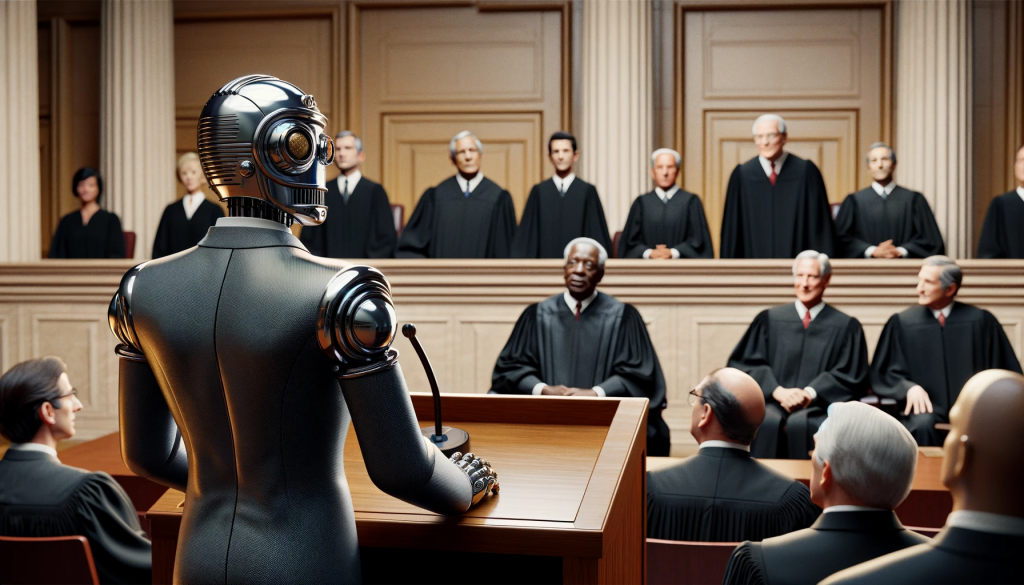
In recent years, artificial intelligence (AI) has gradually woven itself into the fabric of various industries, and the legal field is no exception. While jurisdictions in the West have already begun experimenting with AI in judicial processes, India too is cautiously exploring the potential of integrating AI in courtrooms.
The Need for Technological Intervention
India’s judiciary is grappling with a massive backlog—over 4.5 crore cases are pending across various courts. The sheer volume necessitates innovative solutions. In this context, AI emerges as a potential game-changer. From automating administrative tasks like scheduling hearings to assisting in legal research, AI has the capacity to significantly improve efficiency.
In fact, the Supreme Court of India has already taken some preliminary steps. The launch of the Supreme Court Vidhik Anuvaad Software (SUVAS), an AI tool for translating judicial documents into regional languages, was a notable milestone. Similarly, SUPACE (Supreme Court Portal for Assistance in Courts Efficiency) is designed to assist judges with data analysis, not decision-making—a subtle but crucial distinction.
Potential Benefits
- Improved Efficiency: AI can expedite document review, case law research, and legal drafting—freeing up valuable time for lawyers and judges.
- Predictive Analysis: Based on past judgments, AI can offer insights into likely outcomes of cases, aiding in strategy formulation.
- Judicial Consistency: When used as a supplementary tool, AI can help maintain consistency in legal reasoning and reduce human error or bias.
Ethical and Legal Concerns
While the advantages are compelling, they must be weighed against significant concerns:
- Transparency and Accountability: AI systems, especially those powered by machine learning, operate as “black boxes.” How can we ensure accountability for a machine’s suggestion or outcome? Can a litigant challenge an AI-generated recommendation?
- Bias in Algorithms: AI is only as fair as the data it is trained on. If historical data reflects systemic biases—based on caste, religion, gender, etc.—those biases may be perpetuated by the AI itself.
- Right to a Fair Trial: Article 21 of the Indian Constitution guarantees the right to life and personal liberty, which includes a fair trial. Can AI ever replicate the human intuition and empathy required for nuanced judicial reasoning?
The Role of Lawyers and Judges
It’s important to clarify that AI is not here to replace lawyers or judges. Rather, it should be viewed as an assistive technology—a tool to enhance human capabilities, not substitute them. The role of judicial discretion, interpretation of law, and understanding of societal context remain inherently human.
As members of the Bar, it is incumbent upon us to educate ourselves about this technology, not only to use it effectively but also to ensure it is implemented ethically. Legal education and training must now include basic technological literacy. Moreover, policymakers and judicial authorities must work collaboratively with technologists to ensure that AI tools are designed with transparency, fairness, and accountability in mind.
Conclusion
The introduction of AI in the courtroom is not a question of if, but when and how. Used judiciously, it can be a powerful ally in our quest for a more efficient and accessible justice system. However, in our enthusiasm, we must not lose sight of the constitutional values that form the bedrock of Indian jurisprudence.
As legal professionals, we stand at the cusp of a technological revolution. It is up to us to ensure that while we embrace innovation, we do not compromise on justice.
Leave a Reply
You must be logged in to post a comment.